
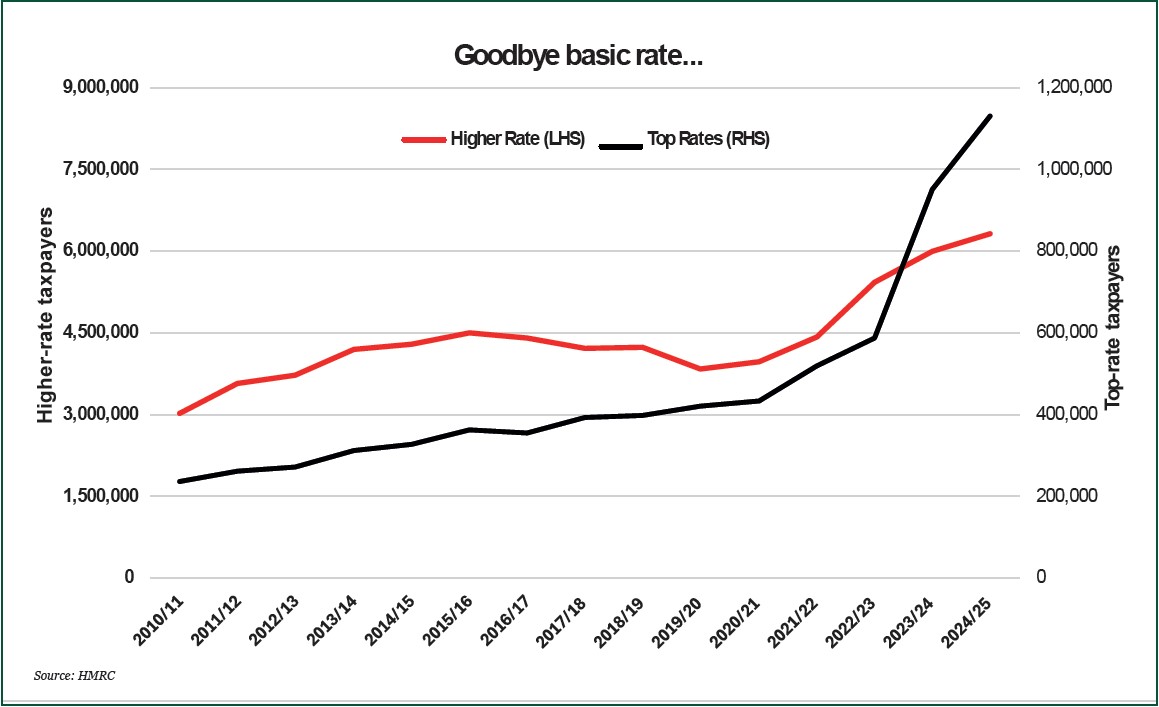
New data from HMRC show there are now more than a million people paying income tax at a rate of at least 45%.
Each year HMRC produces an extensive set of tables about income tax, which accounts for about 30% of all tax revenue. In recent times, Scotland has complicated these tables by creating extra tax bands. For example, in 2024/25 a new Scottish advanced rate was introduced, so HMRC decided to group Scots who pay the new advanced rate (45%) and top rate (48%) together with those in the rest of the UK who pay the additional rate (45%).
The Scottish distortions have failed to alter a clear trend in the data: a sharp rise since 2020 in the numbers paying higher- or additional-rate (as HMRC defined) tax. The higher-rate taxpayer
population boom is a direct result of the freeze on the higher-rate threshold at the 2021/22 level (throughout the UK), despite the over 20% surge in inflation since April 2021.
The additional-rate tax story is worse, because the previously frozen threshold was cut from £150,000 to £125,140 in 2023/24, followed by the Scottish advanced addition in 2024/25.
At the time of the last Budget, the Office for Budget Responsibility estimated that by 2028/29 nearly one in five income taxpayers would be paying higher rate and more than one in thirty would be subject to additional rate.
If you find yourself in, or heading to, higher- or additional-rate tax, it is unlikely any Budget in the next few years will help. If the proportion of your income lost to tax in the future reduces, it is much more likely to be the result of careful personal tax planning than any Chancellor’s generosity. To find out more about the range of those planning options and the tax savings you could make, please get in touch.
The Financial Conduct Authority does not regulate tax advice. Tax treatment varies according to individual circumstances and is subject to change.