
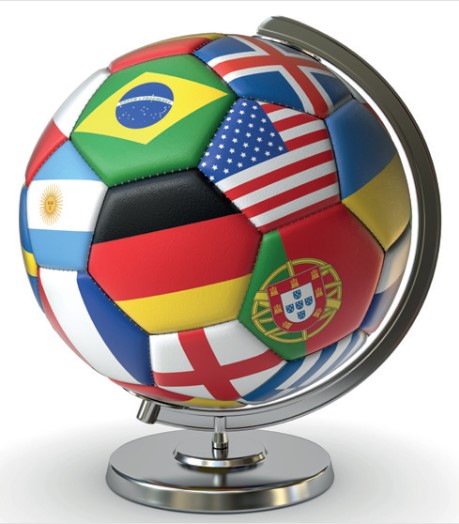
Can investors learn lessons from football fans? Those watching the World Cup this summer might bewishing investment markets followed similar predictable rules.
This year’s World Cup has been expanded to 48 teams — pitching footballing minnows, such as Haiti, Curacao, and Jordan up against perennial favourites Brazil, Germany and Argentina.
You don’t need to be a football pundit to predict the likely outcomes of these matches. But second-guessing investment markets is much harder, particularly with geopolitical tensions triggering periodic bouts of volatility.
Oil prices have risen sharply following the outbreak of hostilities in the Middle East, initially causing share prices to fall on many stock markets – echoing behaviour seen after Russia’s invasion of Ukraine. In both cases, however, stock markets recovered relatively quickly, despite oil prices remaining elevated and slow political progress towards permanent ceasefires.
Investors can find it difficult to judge how specific markets or sectors will react to such global events. Evidence suggests that reacting to short-term news is rarely a winning strategy when it comes to investment.
Playing the long game
There is an old stock market adage that it’s ‘time in the market’ rather than ‘timing the market’ that delivers results. When it comes to football, tournaments often produce early shocks, but the eventual winners will be teams that produce consistency, even with the odd loss along the way.
This same wisdom applies to investing.
If you invested £1,000 in the FTSE All Share at the start of 1986, and left it for 35 years, it would have been worth £19,452 at the start of 2021.
This period encompassed the dotcom bubble, the 2008 financial crisis and Covid-19 crash. If investors missed the 10 best days of the stock market over that 35-year period, the same investment would be worth just £9,932 by 2021. Missing the best 30 days would reduce it to £4,264.
Spreading your investment
Another key pillar is diversification. The World Cup has expanded its global reach this year, and investors may benefit from adopting a similar approach.
Given the media prominence of American tech giants you might assume the US market to be the best-performing stock market. In fact, Argentina topped the five-year league table (to 31 May 2026), with annualised returns of 27.69%. This was followed by Peru, Greece and South Korea – names few pundits would predict.
Over the longer term there are perhaps a few more familiar table-toppers: Taiwan secures the number one position for best performing market over 10 years, and the US comes in fourth. Holding a diversified global portfolio allows investors exposure to these smaller countries, who may burn brightly for shorter periods of time.
Geopolitical events and market sell-offs create plenty of drama, just as football tournaments produce unexpected results. The team that lifts the trophy this summer will have remained focused on their long-term game. Investing rewards the same composure.
The value of your investment, and the income from it, can go down as well as up and you may not get back the full amount you invested.
Past performance is not a reliable indicator of future performance.
Investing in shares should be regarded as a long-term investment and should fit with your overall attitude to risk and financial circumstances.